Grace Mildmay’s interest in physic has been described by Linda Pollock. Her daughter Mary Fane, Countess of Westmorland is rather less well-known, except for her letter to Secretary Windebank in May 1639 urging peace with Scotland, which has been published many times. Her eldest daughter Grace married James, Earl of Home in 1626, after the death of his first wife, Catherine Cary. Six letters from Mary to Grace in Scotland survive. The cataloguer noted these merely as letters with news from court with cipher.
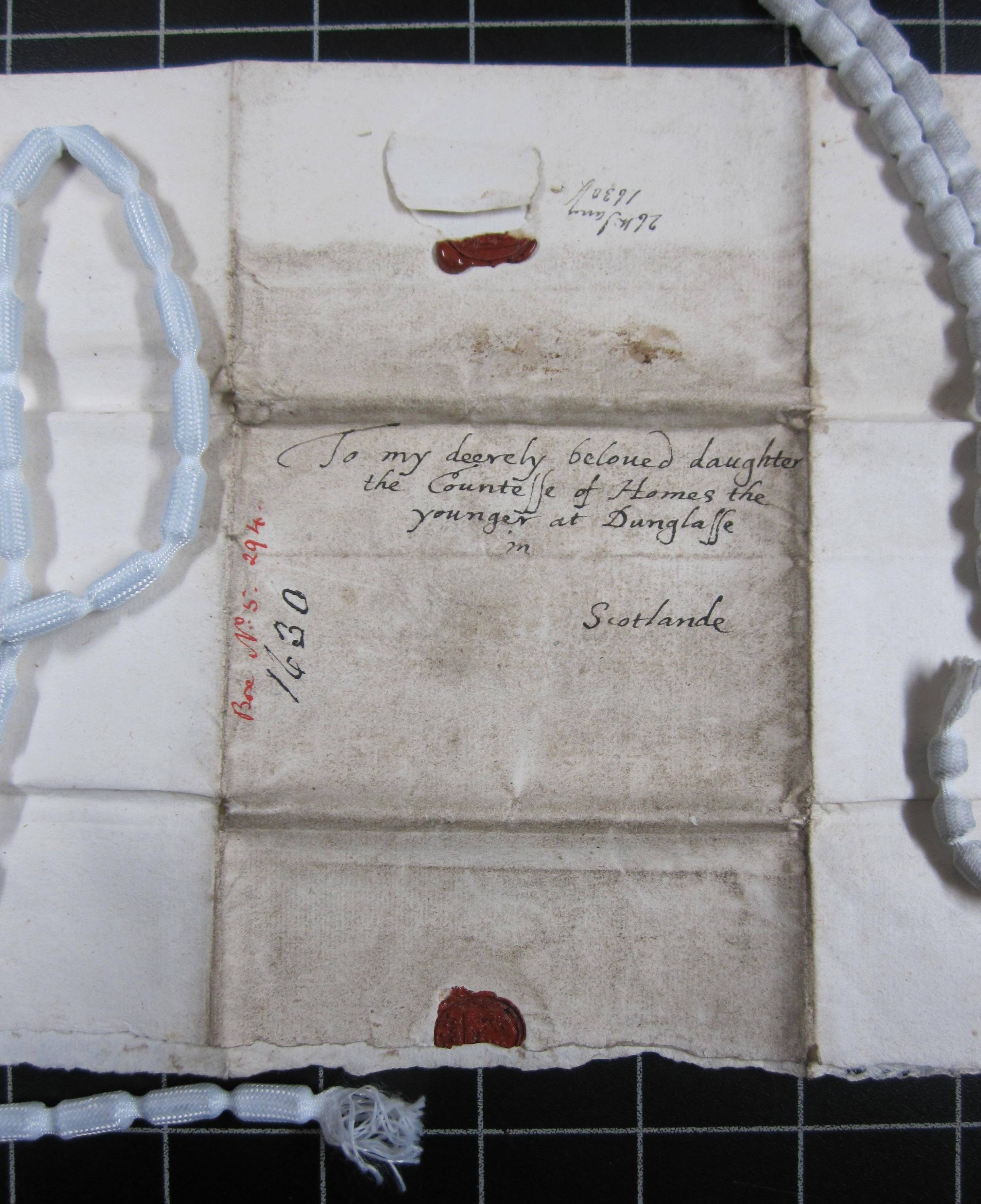
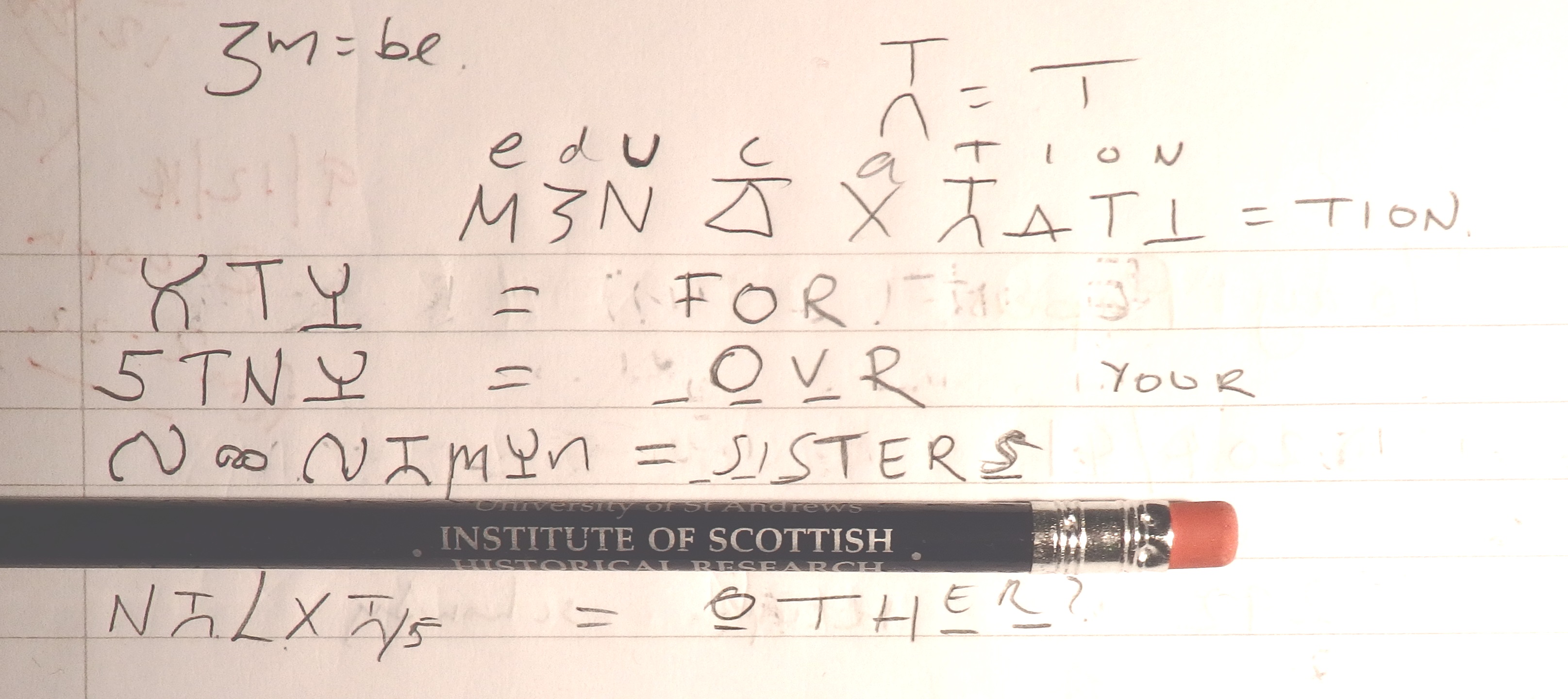
So I put in a request to see these letters, and went to the archive in Edinburgh, ready with pencil and paper to decode the cipher. The court news was of marriages, and hopes that Grace would come to London and see Ben Jonson’s masques with her sisters.
It wasn’t a surprise to learn that Grace who died childless in 1633, had bad health, and had had a miscarriage. Her mother sent opinions from Dr Leonard Poe and Mrs Cuthbert, a London midwife, and criticised the opinions of a Scottish physician, Dr Arnot, who treated Grace. Grace kept a sort of treatment diary, recording Arnot’s prescriptions for her, and her sister-in-law, Margaret Home, Countess of Moray, copied the text into a recipe book.
In 1627 Grace feared she was carrying an ‘unaturall burden’, and to cheer up her daughter Mary recalled stories of difficult pregnancies from her mother-in-law, and how the poet William Waller’s wife, Jane Reynell, who was ‘a little crooked woman’ had started a family after seven childless years.
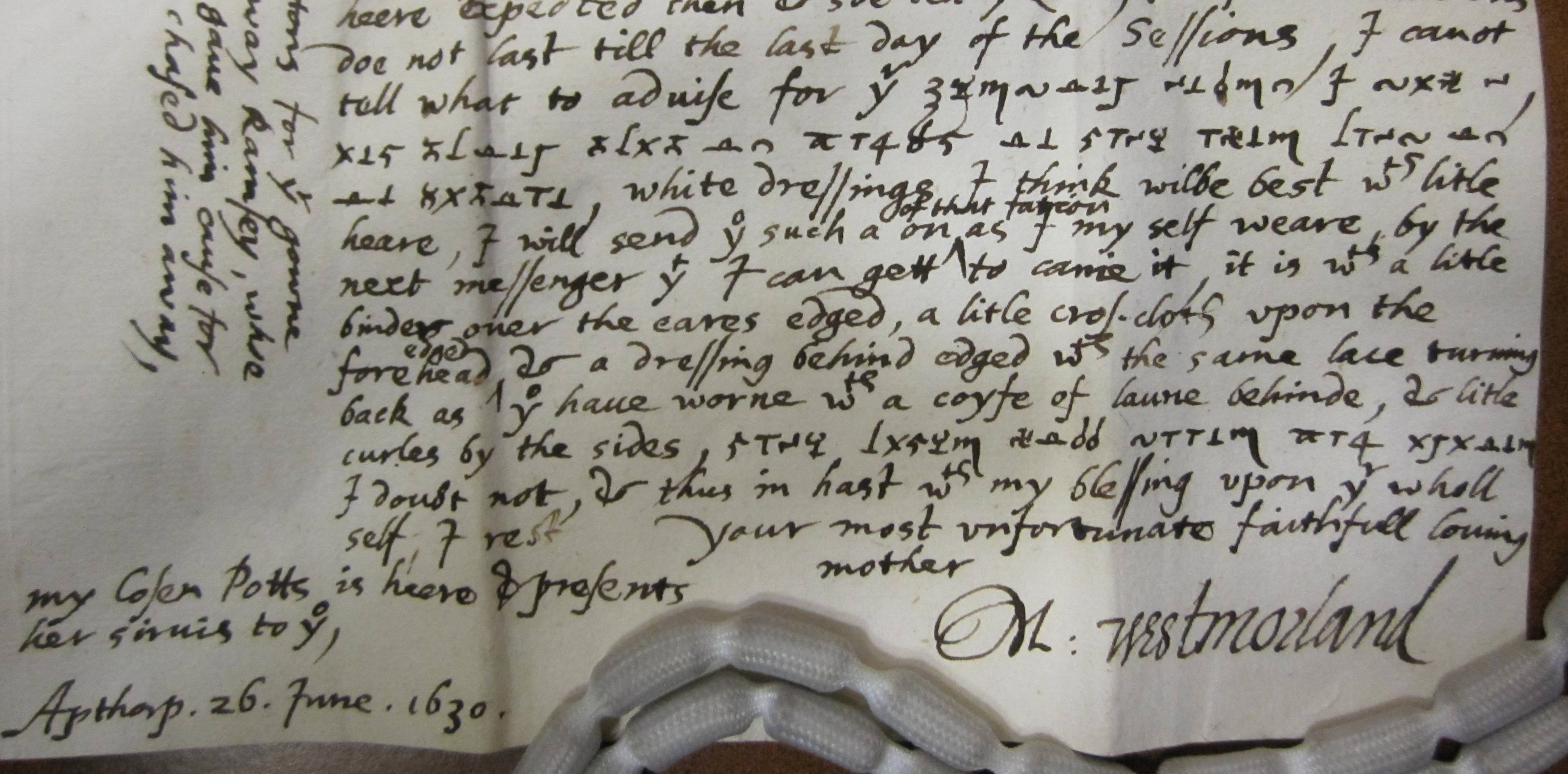
Westmorland’s letter to her daughter, 26 June 1630.
The passages in cipher took a little more time to read, and demanded closer attention and involvement, mostly it wasn’t court news. Mary hoped that Jean Drummond, Countess of Roxburghe, would do something for her younger daughters, hopefully obtain them positions at court. The dowager Countess of Home wasn’t replying to her letters. Another passage coded to avoid embarrasment in June 1630 was written in answer to Grace’s request for advice on the latest fashion in linen and lace bonnets and how to wear her hair:
“I canot tell what to advise for your ‘DRESING ENLES’ I ‘SAW U, ANY THING THAT IS COMLY IN YOUR OWN HOUS IS IN FATION’, white dressings I think wilbe best with litle heare, I will send you such a on of that fation as I my self weare by the next messenger that I can gett to carrie it, it is with a little binder over the eares edged, a litle cros-cloth upon the forehead edge, & a dressing behind edged with the same lace turning back as you have worne with a coyfe of laune behinde, & little curles by the sides, ‘YOUR HAYRE WILL SOONE COM AGAINE'”[1]
These letters were probably kept in the seventeenth century by Grace’s sister-in-law, Margaret Home, Countess of Moray. She kept a rental book of the Barony of Home which Grace made in 1629, a vellum notebook with pink silk taffeta ties, and she copied Grace’s diary of her treatment for reproductive health issues at the hands of Doctor Arnot into a vellum book recipe book after Grace’s death in 1633.
[1] Moray muniments NRAS 217 box 5 no. 296, 26 June 1630.

 Objects and the archive