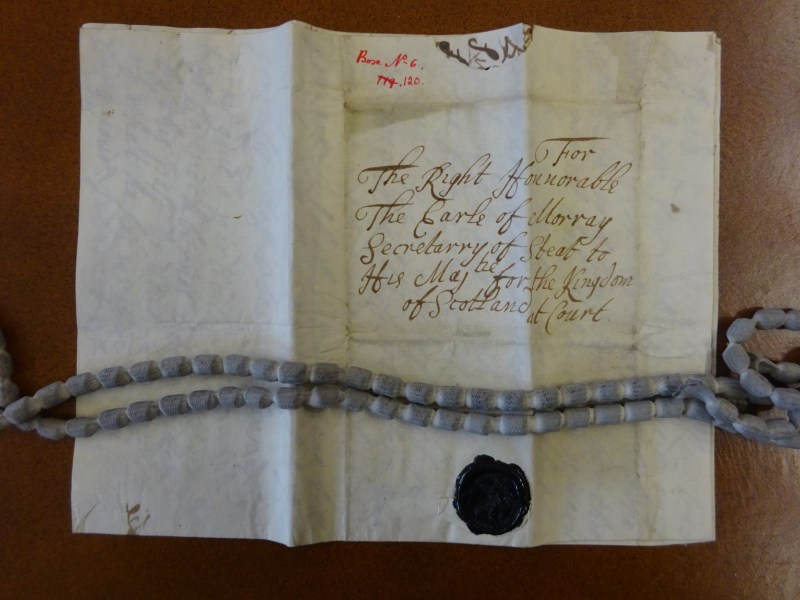
Locked in the pantry at Apethorpe

Mary Mildmay Fane, Countess of Westmorland, wrote to her daughter Grace Fane, Countess of Home, at Dunglass Castle in Scotland, with court news, medical advice, and occasional cheerful recollections. In January 1627, thinking of Grace's planned visit to England, she remembered her own mother Grace Mildmay's laughter, writing: "I pray you reioyce yourself remember my…

Whitekirk and Margaret Tudor

One Latin household books survives from the reign of James IV, (National Records of Scotland, E32/1). It covers dates from 1511 to 1512, giving daily expenses of food for the households of James IV and that of Margaret Tudor. The accountant was the Bishop of Caithness. Like the later Scottish household books, it includes entries…

Rebecca Graham makes a band, 1603

Rebecca Graham worked making textiles in Edinburgh, weaving fringes and passementerie. She made a band or sash for Elizabeth Stewart in 1603, the younger sister of Margaret Stewart, Countess of Nottingham. Graham's business can be compared with the London silkwomen, who worked in a legal framework giving them some exemption from customs of coverture that…

Two letters about cheese

Around six letters sent to Agnes Leslie, Lady Lochleven survive, four in the National Library of Scotland and two in the National Records of Scotland. Two letters are about cheese: cheese bought in Stirling by her agent Alexander Bruce, and cheese gifted to Marion Douglas, wife of the keeper of Edinburgh Castle, George Douglas of…

Fabrics from a Dundee merchant, 1573

A Dundee merchant’s letter offering dress fabrics, June 1573 Peter Clayhills wrote to Agnes Leslie, Lady Lochleven, sending her order of fabrics. He offered her summer dress fabrics, and velvet from the stock that had ‘come home’, and cloth he expected to arrive at midsummer. One fabric was 'very light for gowning in summer'. This…

Keeping a camel at Holyrood Palace

James VI of Scotland, like other renaissance monarchs, kept unusual or exotic pets. We know a lot about his lion from the complaint made by its keeper, Wilhelm Froelich, who had brought the animal from Denmark.  Not all of these animals were diplomatic gifts with an obvious heraldic tie-in. A skipper from Leith, John Downy…