Catherine Tollemache was a daughter of Lionel Tollemache and Elizabeth Murray (later Duchess of Lauderdale). In 1677, she came to Edinburgh with her mother and the Duke of Lauderdale and stayed at Moray House in the Canongate. The Duke was the uncle of James Stuart, Lord Doune, and Catherine married him in December 1677. After his death, she married the Earl of Sutherland.
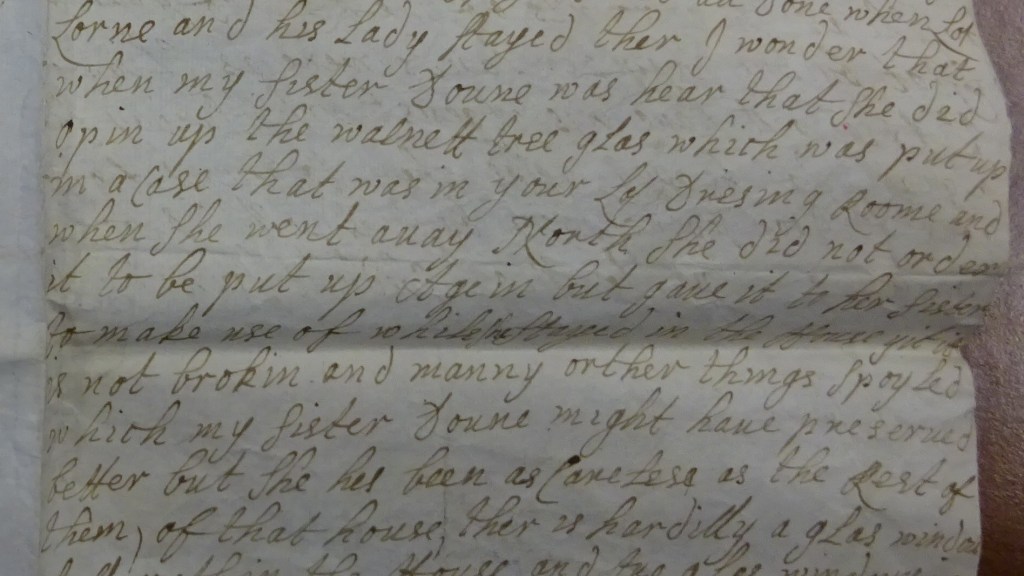
Charles Stuart, later Earl of Moray, moaned about the state of Moray House in 1683 blaming his “sister Doune” for moving a walnut framed mirror before “she went away North” and leaving it for her sister Elizabeth, Lady Lorne to use.1
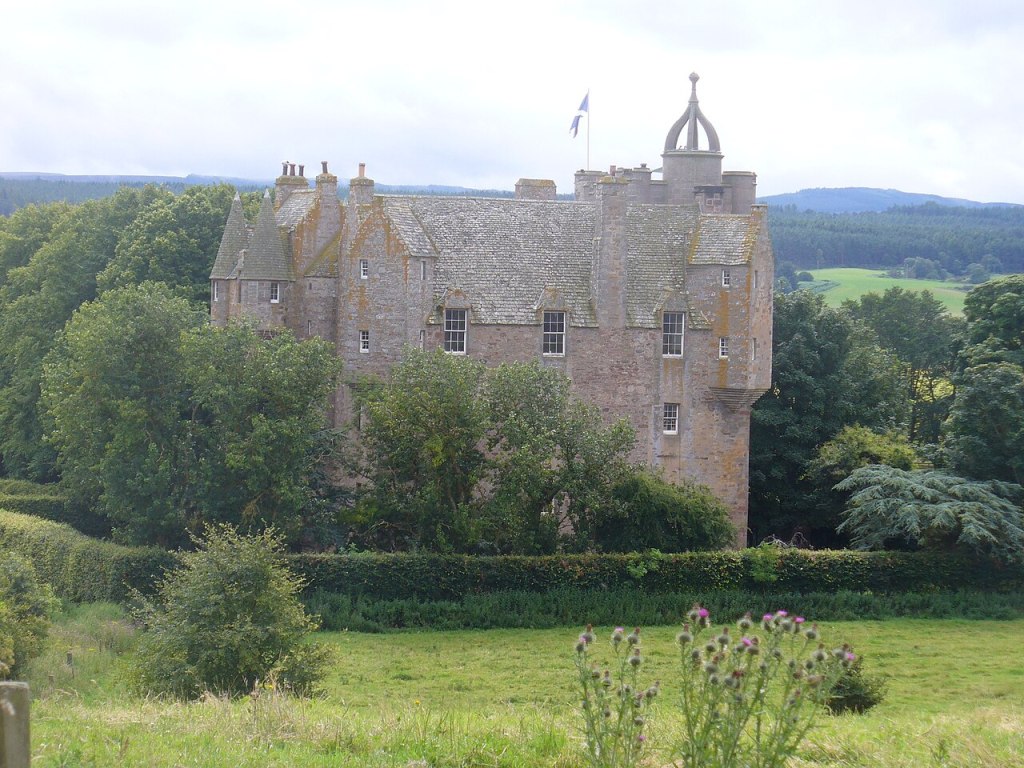
As Lady Doune, Catherine Tollemache lived at Castle Stuart near Ardersier. She wrote letters to the steward of the Earl of Moray, Mr James Cristy. Cristy lived at Earl’s Mill nearer to Darnaway, which was on the Muckle Burn, west of Forres, not far from Brodie Countryfare on the A96.
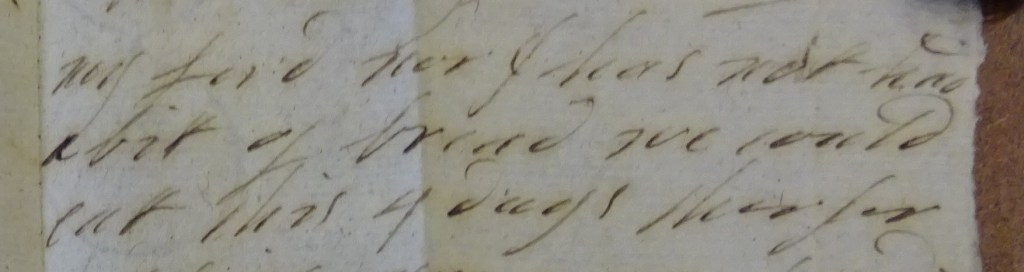
In most of her letters, Catherine asked for meal for making bread and other foods. Cristy kept the letters as receipts. There were shortages, and sometimes there was no meal for bread at Castle Stuart. Catherine wrote, ‘my Lord nor I has not had a bit of bread we can eat these 4 days’. The general dearth in Scotland is known as the Seven Ill Years.
Catherine continued to improve the outbuildings at Castle Stewart, employing a carpenter from Elgin called William Sinclair. Some of the timber was provided by Cristy. Catherine’s letters mention ‘couples’,2 the timber roof supports which were partly pre-fabricated by William Sinclair. In letter (6:88), she asks Cristy about Sinclair’s work, asking for Sinclair to “mak all the hast he can with my cupills which I have bespock of him to mak, for the time of bilding is coming on’.
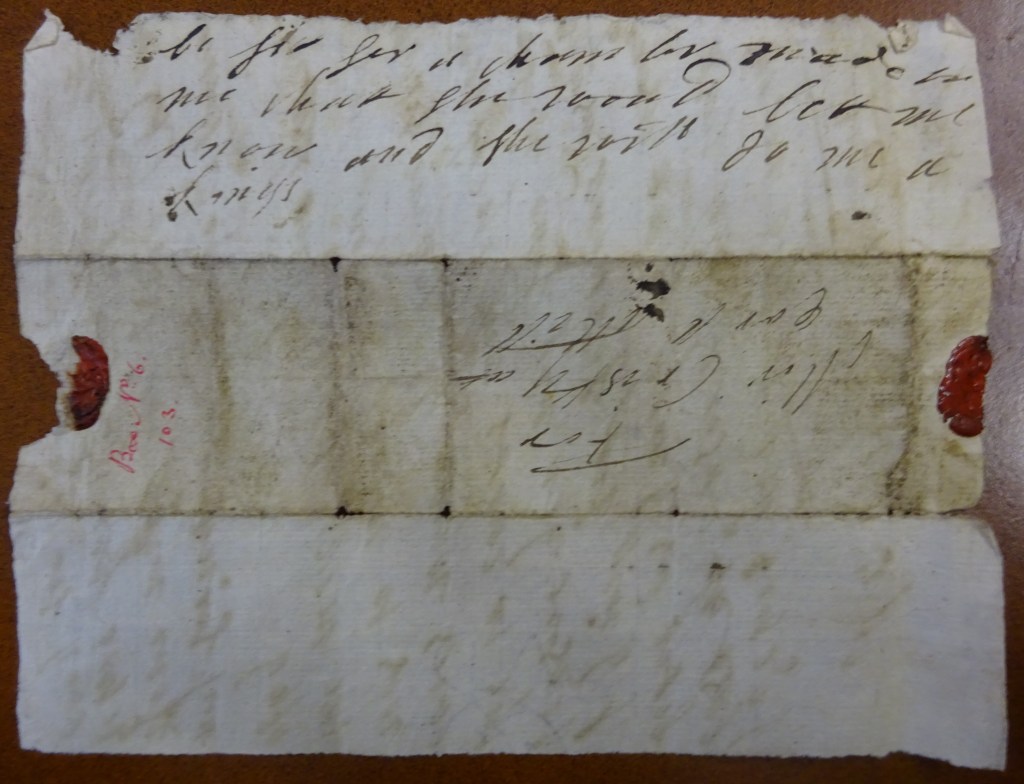
She also asked Cristy and wife to help find her new servants, though a man called Peter caused her some anxiety. She also asked them to recommend a ‘pretty lady’ who could wait at her table, ‘if you know of a prity lade for to wait in my ho[u]se thatt is to say to lay the claith and keap the plat & set on the dishes … and keap the sarvants … I should be glad for I want on[e] for the house’, and Cristy’s daughter worked for her till her marriage.
Catherine later ordered silver pudding forks from Robert Bruce an Edinburgh goldsmith. As appears in these letters, Lord Doune was something of an invalid. By the time the silver arrived, Catherine had married John, 15th Earl of Sutherland. He settled Bruce’s bill after she died.3
There are about a dozen of these letters in the Moray papers and they seem quite promising, though they are extremely tough to read. This one (box 6 no. 100) mentions the building projects at Castle Stuart, which she frames as Lord Doune’s project, which she is to build:
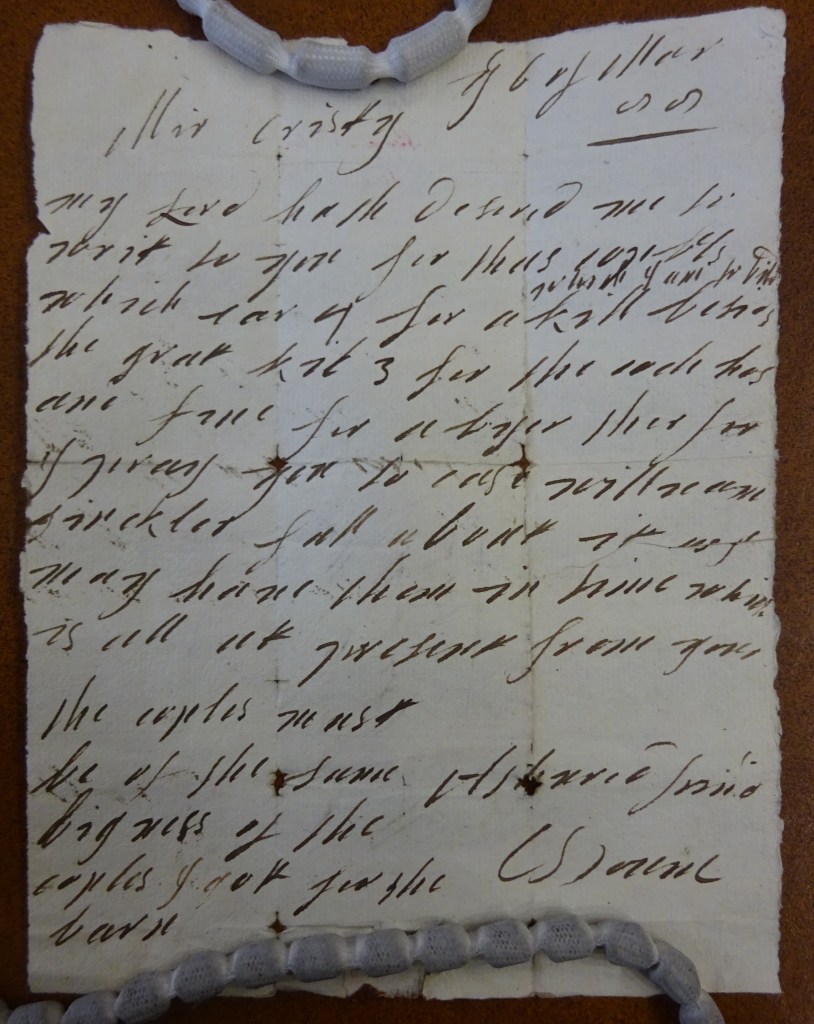
For Mir Cristy at Earll Mill
CS, 6 of Mar [?1695]
Mir Cristy,
My Lord hath desired me to writ to you for this coubels which, ^which I am to bild^, ar 4 for a kill besids the great kil 3 for the coch hos, and five for a byer ther, for I pray you to ca[u]se William Sinckler [?fall/sett] about it as I may have them in time which is all at present from your
Ashurrid frind CDoune
the cuples must be of same bigness of the cuples I gott for the barn
In moderised spelling:
C[astle] S[tuart], 6 of March [?1695]
Mr Cristy,
My Lord hath desired me to write to you for these couples which are 4 for a kiln4 besides the great kiln, 3 for the coach house, and five for a byre there, which I am to build, for I pray you to ca[u]se William Sinckler set about it as I may have them in time, which is all at present from your
Assured friend Catherine Doune
the couples must be of same bigness of the couples I got for the barn
- Moray papers, box 6 no. 122, Charles Stuart to the Earl of Moray, May 1683. ↩︎
- Couple, pair of rafters, see DOST/DSL Cuppill, n. ↩︎
- Olive Geddes, The Laird’s Kitchen (Edinburgh: HMSO, 1994), p. 15. Robert Bruce’s bill to Lady Doune is there illustrated, from National Library of Scotland Dep. 313/504. ↩︎
- Kill, kiln, a building for drying and storing grain, see DOST/DSL Kill, n.1 ↩︎

